Joseph Ratzinger: Collected Works
Release Schedule
2026
6.1: Jesus of Nazareth
2027
6.2: Contributions to Christology
13.2: In Conversation with the Times
13.1: In Conversation with the Times
2028
1: The People and House of God in Augustine’s Doctrine of the Church: The Dissertation and Other Studies on Augustine and the Theology of the Church Fathers
4: Introduction to Christianity: Profession of Faith—Baptism—Discipleship
2029
13.3: In Conversation with the Times
2: Bonaventure’s Concept of Revelation and Theology of History: The Habilitation Thesis and Bonaventure Studies
2030
3.1: The God of Faith and the God of the Philosophers: Philosophical Reason—Culture—Europe—Society
3.2: The God of Faith and the God of the Philosophers: Philosophical Reason—Culture—Europe—Society
2031
5: Origin and Destiny: The Doctrine of Creation—Anthropology—Mariology
7.1: On the Teaching of the Second Vatican Council: Formulation—Communication—Interpretation
2032
7.2: On the Teaching of the Second Vatican Council: Formulation—Communication—Interpretation
8.1: The Church, Sign Among the Nations: Writings on Ecclesiology and Ecumenism
2033
8.2: The Church, Sign Among the Nations: Writings on Ecclesiology and Ecumenism
9.1: Faith in Scripture and Tradition: Principles of Fundamental Theology
2034
9.2: Faith in Scripture and Tradition: Principles of Fundamental Theology
10: Resurrection and Eternal Life: Contributions to Eschatology and the Theology of Hope
2035
11: Theology of the Liturgy: The Sacramental Foundation of Christian Existence
12: Heralds of the Word and Servants of Your Joy: Theology and Spirituality of the Sacrament of Orders
2036
14.1: Sermons: Homilies, Speeches, and Meditations
14.2: Sermons: Homilies, Speeches, and Meditations
2037
14.3: Sermons: Homilies, Speeches, and Meditations
15.1: My Life: Autobiographical Texts
2038
15.2: My Life: Autobiographical Texts

GET 20% OFF THE INAUGURAL VOLUME WITH FREE US SHIPPING
A Cathedral
in Print
Experience the Bible like never before, wrapped in 2,000 years of insight, art, and tradition. Over 400,000 copies sold!
Beautiful. Readable. Durable.
Word on Fire’s Liturgy of the Hours is here!
A Cathedral
in Print
Experience the Bible like never before, wrapped in 2,000 years of insight, art, and tradition. Over 400,000 copies sold!

Overview of the Project
Project Overview
The Joseph Ratzinger: Collected Works is the complete English translation of the original German series. It gathers all of Ratzinger’s books, articles, talks, and interviews, along with hundreds of speeches and homilies: more than five million words. Only about half of this material has ever appeared in English.
Word on Fire Academic will publish the complete 24-volume series in English, including a new edition of Volume 11, Theology of the Liturgy—the only volume to date that has appeared in English. Working with other publishers, Word on Fire is incorporating existing translations and commissioning many new ones as well.
Translation work is already well underway, with nearly half the series now in translation or review. This includes the first-ever English translation of Ratzinger’s doctoral dissertation, The People and House of God in Augustine’s Doctrine of the Church.
Word on Fire Academic will release the inaugural volume in 2026, three volumes in 2027, and two volumes per year thereafter, completing the series over the next twelve years.
Word on Fire is collaborating with the Joseph Ratzinger / Benedict XVI Foundation (Rome) and St. Mary’s University (Winona, Minnesota) to promote the release of these volumes through conferences, symposia, and other events.

About the Joseph Ratzinger: Collected Works
Available in English for the First Time
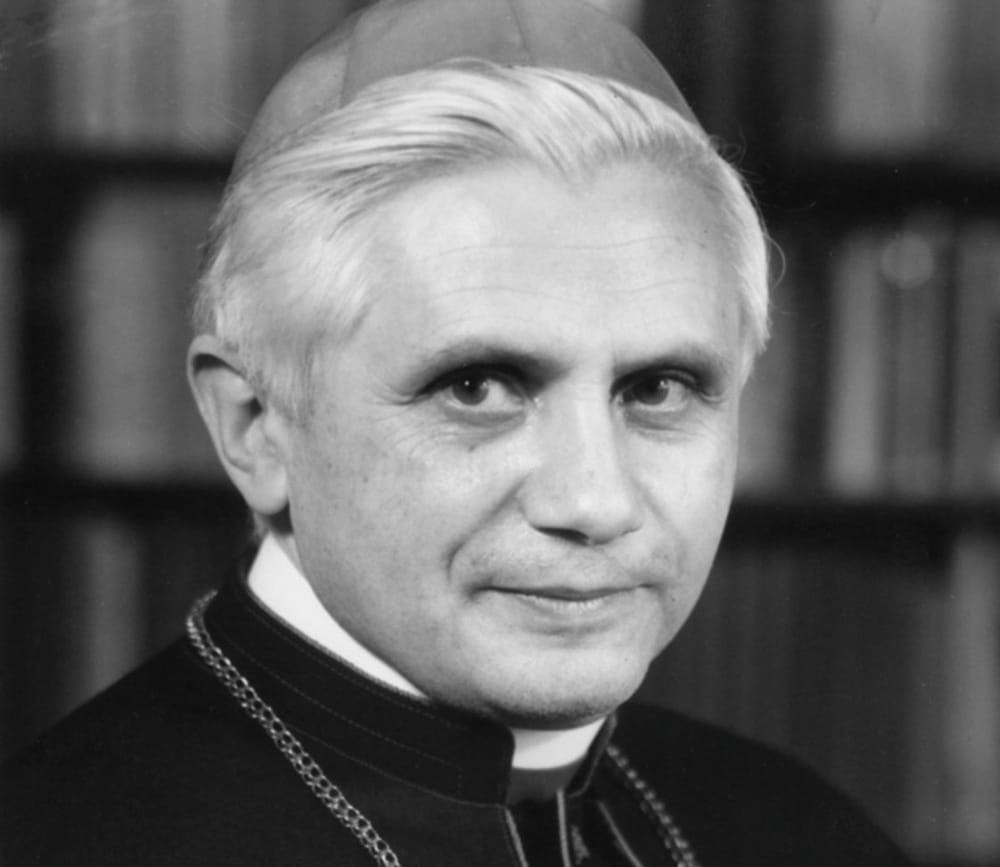
Compiling more than five million words, this series spans Ratzinger’s writing on Christology, liturgy, ecclesiology, culture, and more. About half of this material has never been published in English.
Available in English for the First Time
Compiling more than five million words, this series spans Ratzinger’s writing on Christology, liturgy, ecclesiology, culture, and more. About half of this material has never been published in English.

The Most Accurate English Translations
Led by series editor Dr. Tracey Rowland—renowned theologian and recipient of the Ratzinger Prize—a team of expert translators and editors is producing the most accurate, authoritative collection of Ratzinger’s writings in English. Existing translations have been updated for accuracy, and the series handles terminology, Scripture, citations, and style consistently across the entire collection.
Designed for Years of Study
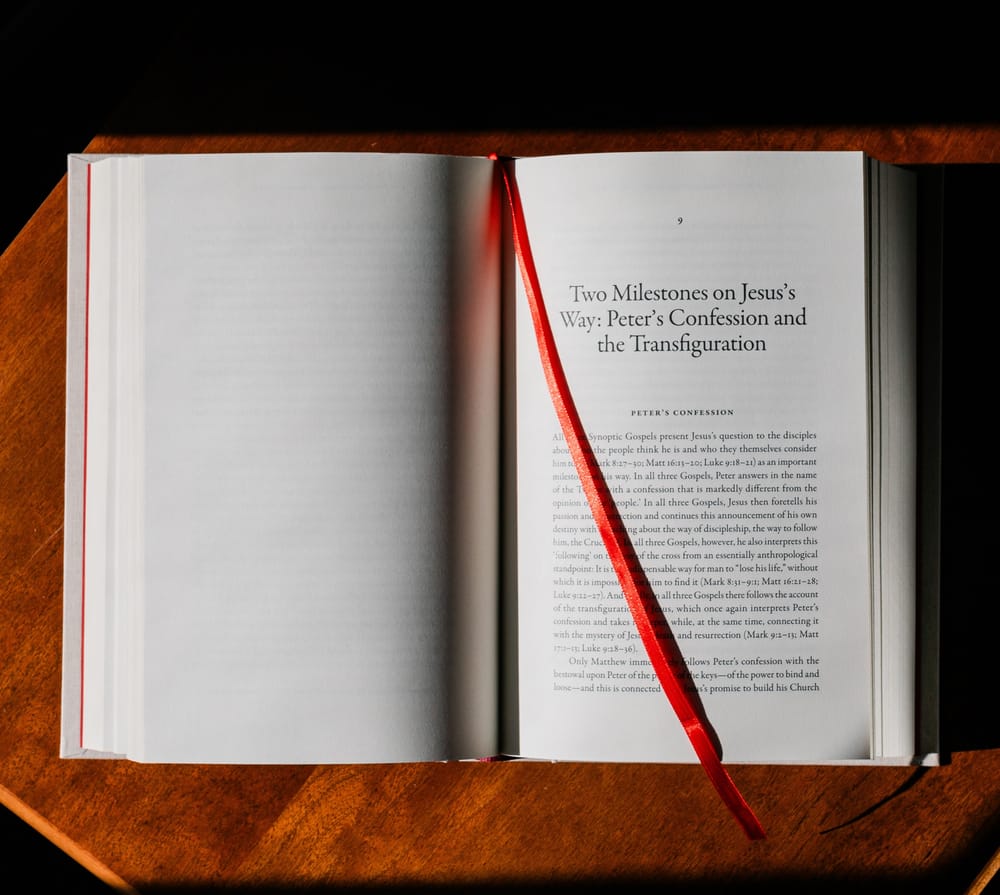
Each volume is Smyth-sewn to lie flat on the desk and includes a ribbon to mark your place. Matching volumes stand together on the shelf as a single reference library.
Designed for Years of Study
Each volume is Smyth-sewn to lie flat on the desk and includes a ribbon to mark your place. Matching volumes stand together on the shelf as a single reference library.
The story begins in 2001 when Pope St. John Paul II called for a shift away from a form of translation known as dynamic equivalence, which conveyed the general thought of the original passage but lacked theological precision. The Roman Missal, which is the prayer book used for the mass, was the first to receive this long-awaited refinement in 2011. After 15 years in development, the new translation of the Liturgy of the Hours is finally ready.
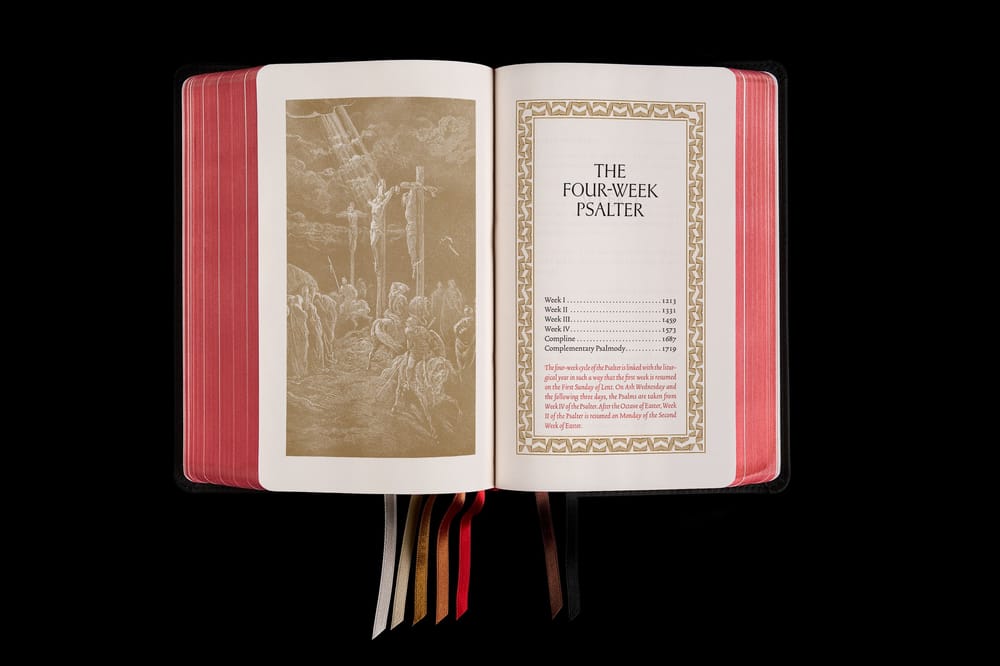

More than half a century of the Church’s calendar has now been fully integrated into this new edition, including saints and feasts proclaimed since the mid-twentieth century: Saint Teresa of Calcutta, Pope Saint John Paul II, Saint Maximilian Kolbe, and more.
The traditional hymnody of the Church has been restored in its entirety. Nearly 300 hymns, including compositions by giants of the early Church such as Saint Ambrose and Saint Hilary, now appear in the Liturgy of the Hours. Assigned appropriate spots based on the feast day, season, or specific hour, these hymns are conveniently located near the corresponding prayer. Hymns are set predominantly in common, accessible tunes, allowing them to be sung without mastering hundreds of unique melodies.

Exploring the Legacy of a Theological Giant
Bishop Robert Barron and Dr. Jason Paone, Editorial Director of the Joseph Ratzinger Collected Works, discuss Bishop Barron’s encounters with Ratzinger and a question Ratzinger raises in Jesus of Nazareth: Can a free society accept truth as the measure of justice?
FORTHCOMING VIDEO WILL GO HERE
“This book . . . is an expression of my personal search ‘for the face of the Lord.’”
JOSEPH RATZINGER
from the foreword to Jesus of Nazareth
Ratzinger’s Three Masterful Jesus of Nazareth Books in One Volume
Widely regarded as the essential modern study on the life of Christ, this single-volume release combines all three original books in Ratzinger’s celebrated trilogy into one seamless, inspiring edition.
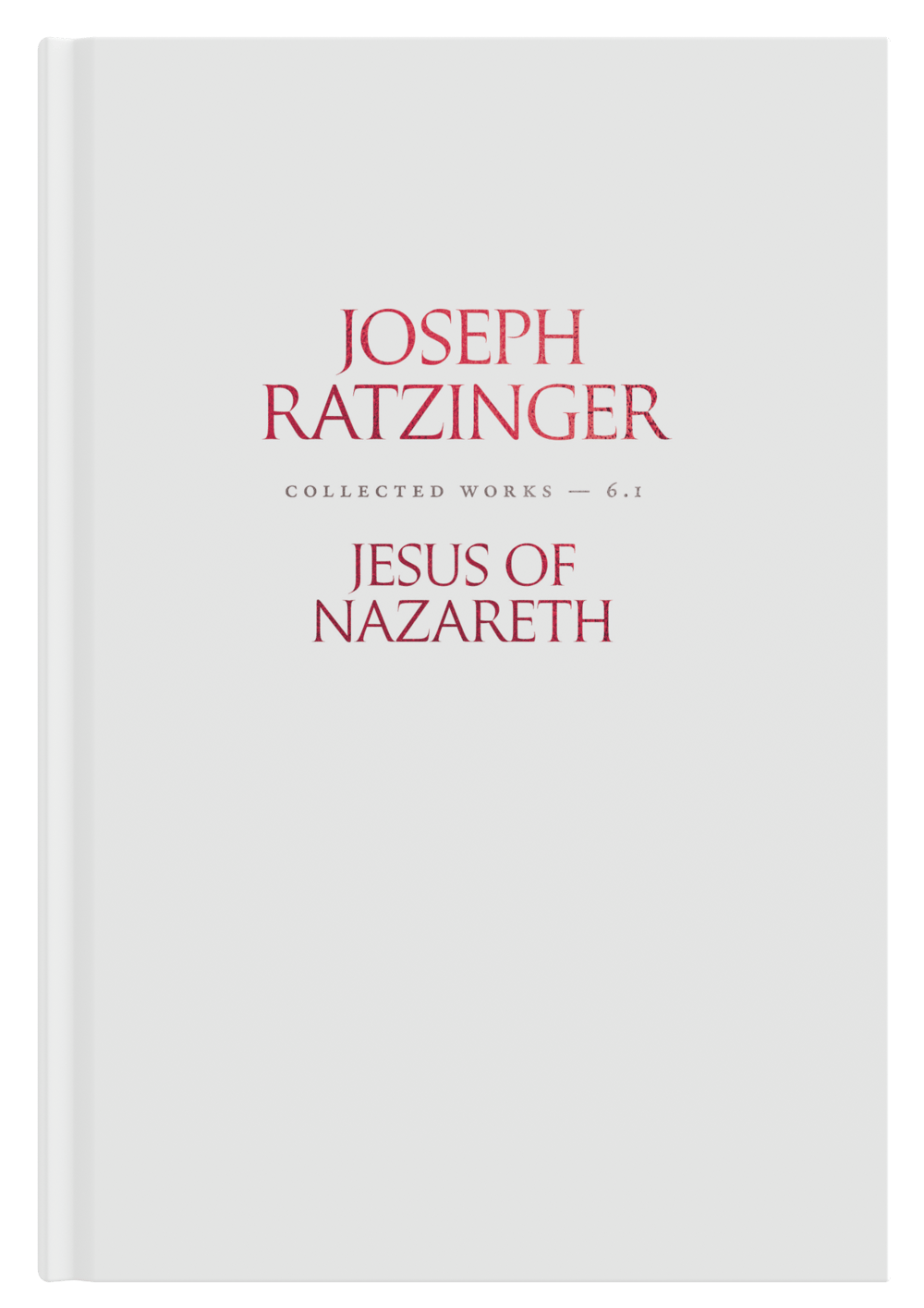
Volume 6.1 brings together Ratzinger’s Jesus of Nazareth trilogy (2007–2012) in a single volume for the first time in English, arranged in the order of Christ’s life:
- The Infancy Narratives: Serving as a prelude to the Gospels, this foundational text explores the origins, birth, and early childhood of Jesus, illuminating how the prophecies of the Old Testament find their ultimate fulfillment in the nativity.
- From the Baptism in the Jordan to the Transfiguration: This central section examines Jesus’s public ministry, unpacking the kingdom of God, the Sermon on the Mount, the parables, and the revelation of Christ’s divine identity to his disciples.
- From the Entrance into Jerusalem to the Resurrection: Focusing on the crucial climax of the Gospel narrative, this final part offers a deep theological meditation on Holy Week, the institution of the Eucharist, the passion, the cross, and the historical and spiritual reality of the resurrection.
The previous English translations have been revised against the German, and the sources Ratzinger quotes or alludes to have been checked and identified. The volume also includes forewords by Cardinal Gerhard Müller and Helmut Hoping, a cumulative bibliography, and Scripture and general indices.
The story begins in 2001 when Pope St. John Paul II called for a shift away from a form of translation known as dynamic equivalence, which conveyed the general thought of the original passage but lacked theological precision. The Roman Missal, which is the prayer book used for the mass, was the first to receive this long-awaited refinement in 2011. After 15 years in development, the new translation of the Liturgy of the Hours is finally ready.
More than half a century of the Church’s calendar has now been fully integrated into this new edition, including saints and feasts proclaimed since the mid-twentieth century: Saint Teresa of Calcutta, Pope Saint John Paul II, Saint Maximilian Kolbe, and more.
The traditional hymnody of the Church has been restored in its entirety. Nearly 300 hymns, including compositions by giants of the early Church such as Saint Ambrose and Saint Hilary, now appear in the Liturgy of the Hours. Assigned appropriate spots based on the feast day, season, or specific hour, these hymns are conveniently located near the corresponding prayer. Hymns are set predominantly in common, accessible tunes, allowing them to be sung without mastering hundreds of unique melodies.
“Being Christian is not the result of an ethical choice or a lofty idea, but the encounter with an event, a person, which gives life a new horizon and a decisive direction.”
JOSEPH RATZINGER
Deus Caritas Est (2005)
Bishop Barron on the Collected Works
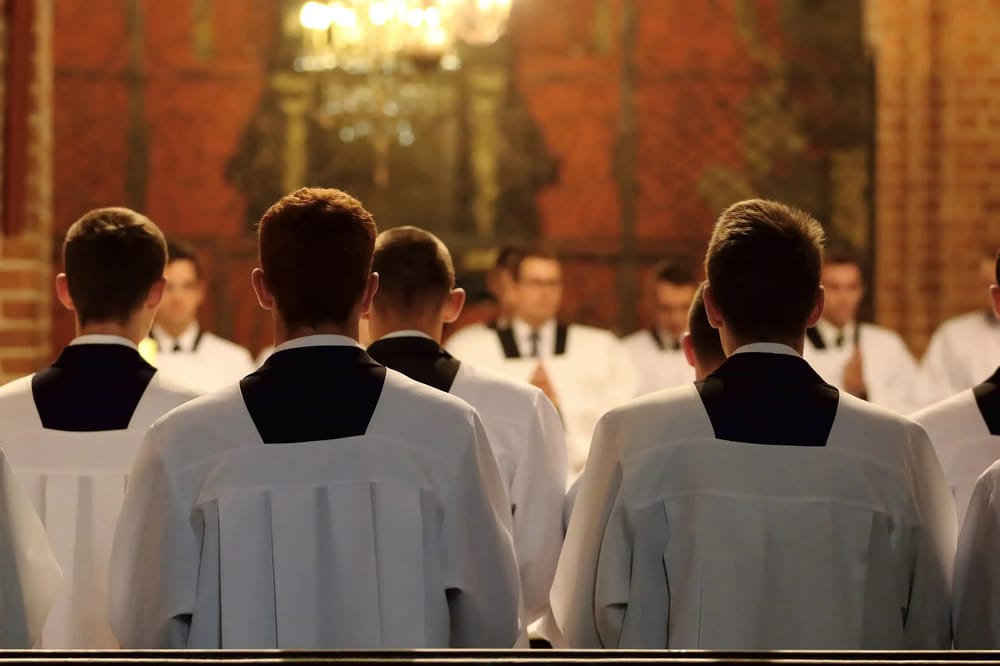
A new generation of priests
Every seminarian in the United States will receive a complimentary set of the Word on Fire edition. Future priests across the country, and their parish flocks, can now pray from the same texts and volumes.
The project seeks to foster deeper engagement with the Church’s daily prayer. By praying from the same edition used in seminaries across the country, lay Catholics can participate in the same daily rhythm of prayer that forms future priests.
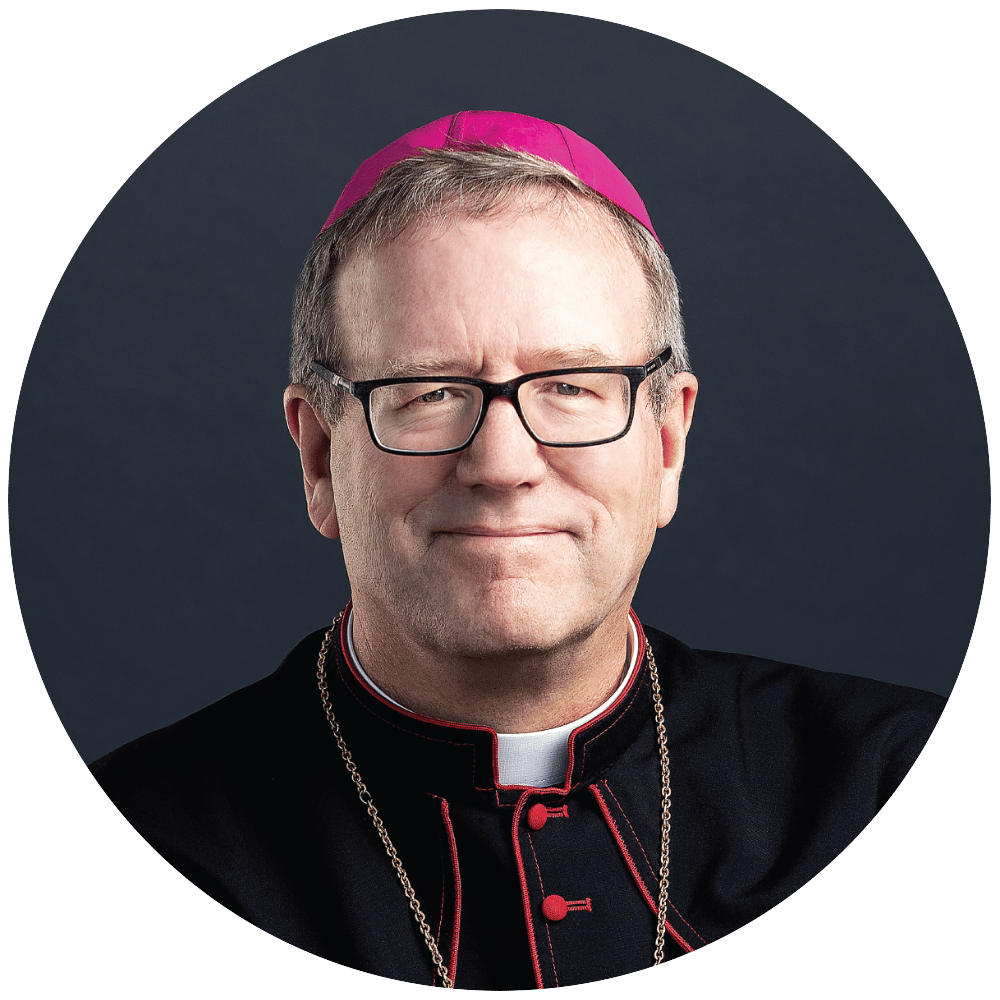
Joseph Ratzinger left a remarkable legacy in both the Church and the wider society. He proved to be a consequential player at Vatican II, contributing to the composition of many of its major documents and explaining its teaching to the culture. As head of the Congregation for the Doctrine of the Faith, Ratzinger spent twenty-three years articulating the teaching of Vatican II and defending it against its critics on both the left and the right. His election as Pope Benedict XVI in 2005 was largely a function of his being perceived as a balanced man of the council.
Ratzinger’s extraordinary learning, erudition, and Christocentric approach have become touchstones for a new generation of Catholic theologians. In fact, the name of Word on Fire’s academic journal, The New Ressourcement, is an homage to the original ressourcement movement led by Ratzinger and others. We’re carrying the torch they first lit.
When I learned that only half of Ratzinger’s writings have been translated into English, and just one of the volumes in his Collected Works, I asked my publishing team to explore the possibility of Word on Fire Academic completing this important series. Our team responded with excitement, crafting a vision for beautiful, high-quality volumes that will be used for years to come. We see this as a great service both to the Church and the academy.
BISHOP ROBERT BARRON
Diocese of Winona-Rochester
Founder of Word on Fire
“This is a spiritual investment in the future of the Church”
—BISHOP ROBERT BARRON
“[Faith] is born above all from a true encounter with God in Jesus Christ, from loving him, from trusting him.”
JOSEPH RATZINGER
General Audience (2012)
Release Schedule
Word on Fire Academic is releasing Jesus of Nazareth in 2026, three volumes in 2027, then two volumes per year until the Joseph Ratzinger: Collected Works is complete—a comprehensive library of Ratzinger’s thought.
How are the volumes numbered?
The Joseph Ratzinger: Collected Works series follows the numbering of the original German edition, which arranges Ratzinger’s writings by subject rather than by date. When a subject was too large for one book, the volume was divided into parts, numbered with a decimal. For example, 6.1 and 6.2 together make up volume 6, Ratzinger’s writings on Christ.
Retaining the German numbering means each volume contains the same texts as the original. As with the German edition, the volumes are not released in numerical order. The series begins with volume 6.1, Jesus of Nazareth, which gathers all three books of the trilogy into one volume. New volumes will be released each year until the collection is complete.


Word on Fire
Privacy
Contact us at support@wordonfire.org or (866) 928-1237
